[email protected] Request a Quote
 Call Us +86-371-66859535

DC Power Supply for Electrolysis: Ripple, Efficiency, and Protection
A power supply for electrolysis runs long. Rust removal, hydrogen, whatever the tank is doing—it’s hours, sometimes days. The power supply is the part that decides whether hour 60 looks like hour 1.
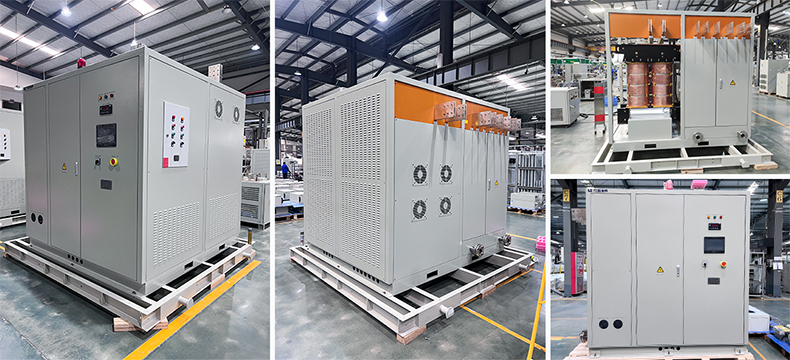
Why a General-Purpose DC Supply Isn’t Enough
An electrolysis DC supply is a regulated current source. It pushes a controlled redox reaction in water or molten salt and keeps voltage and current where you set them.
Ripple is the first thing to check on a power supply for electrolysis. That’s the AC wobble riding on the DC output. Your multimeter won’t show it. Your process will. It modulates the reaction rate moment to moment—the cell’s double-layer capacitance smooths some of it, the rest turns into heat instead of product. In hydrogen work that’s electricity you paid for and didn’t use. In rust removal it shows up as patchy current and pitting. No ripple spec on the datasheet? Assume it’s bad.
Adjustability comes next. Cells have a narrow voltage window. Go past it and you’re making heat, not chemistry. The supply has to hold its setpoint for the whole run. Industrial units publish numbers: steady-current and steady-voltage precision in the 1% range for a standard electrolysis gas supply, tighter than 1% on a high-power IGBT hydrogen unit.
Then protection. Twelve-hour runs turn into three-day runs. Overcurrent, overvoltage, short circuit, overheat—these stop one fault from taking out the supply and the electrodes together. All four are standard on industrial electrolysis supplies. A high-power IGBT hydrogen supply adds undervoltage, water temperature, and water pressure protection.
Voltage and Current Aren’t Independent
People spec a power supply for electrolysis like voltage and current are separate knobs. The cell stack decides both.
Bipolar stack? Output voltage is basically the sum of the cell voltages. Current comes from electrode area and the current density you want. Industrial product lines cover a wide spread:
- Compact electrolysis gas supplies: 10V/20kA class, input power around 200kW. Built for electrolytic synthesis of hydrogen, SF6, CF4, and similar specialty gases.
- High-power IGBT hydrogen supplies: 0–145V, 0–10,000A, both adjustable and customizable.
- IGBT chopper hydrogen supplies: up to 2000V out, 100kA or custom, power factor ≥95%. An extreme-capability build, not a catalog item—confirm with the manufacturer before planning around it.
Rectifier cost tracks current much harder than voltage. Design from scratch and you can add cells in series—more voltage, less current for the same power—and shrink both the price tag and the cabinet.
Two Topologies
High-frequency switching first. MOSFET topology with synchronous rectification: 94% rated efficiency and up, current ripple around 1%. A high-power IGBT hydrogen unit also runs 94% and up. The PWM + IGBT chopper version claims power factor up to 0.99 and harmonic current ≤3%.
Thyristor is the other route. SCR supplies list rectification efficiency above 99%, current sharing around 0.96, output up to 1500V and 100kA, with 12-, 24-, or 36-pulse options to soften grid impact.
Small and mid-size setups—rust tanks, bench hydrogen, teaching rigs—usually gain more from the ripple and regulation of a switching supply. Very high current industrial chlor-alkali or hydrogen plants have room for both. For a power supply for electrolysis, weigh grid conditions and lifecycle cost, not just the sticker.
Questions That Come Up
Constant current or constant voltage?
Constant current, for almost everything. Electrolysis is current-driven—hold the current and the reaction rate stays put. Constant voltage lets current drift as the cell heats up or the electrolyte changes, which means the process drifts with it. The exception is batch work where you want current to taper off near the end; there, a CV mode or a voltage ceiling can serve as a stopping cue.
How much voltage?
Per-cell voltage times the number of cells in series. Follow the cell maker’s range and leave adjustable headroom.
Which protections?
Overcurrent, overvoltage, short circuit, thermal overload. Three-phase input, add phase-loss.
Match the power supply for electrolysis to your cell’s voltage and current. Verify the ripple figure. Pick a topology that fits your scale and your grid.
Industrial electrolysis supplies span from 10V/20kA gas units through 145V/10kA hydrogen supplies to 2000V/100kA IGBT chopper builds. Ripple lands between 1% and 3% depending on model, efficiency starts at 94%, protection is complete. Numbers you can check beat marketing copy.
The gap between a proper supply and a marginal one is small. The gap between a finished run and a scrapped batch is not.
⚡ Liyuan Haina Rectifier
Professional Manufacturer of IGBT and SCR Rectifiers
Our products are mainly used in electroplating, electrolysis, electrochemistry, anodizing, electrophoresis, smelting, surface treatment, photovoltaics, energy storage, hydrogen energy, and other applications. They are also widely used in industries such as hydrogen electrolysis, copper refining, copper electrowinning, electrolytic copper foil, and related industries.