[email protected] Request a Quote
  Call Us +86-371-66859535

How to Choose a DC Power Supply for Electrolysis
A line goes down for an hour, that hour comes off the output. Pick the wrong supply and it is not just power that stops.
Bath resistance never sits still. Electrodes wear. Temperature shifts. Gas bubbles form and collapse. A fixed-voltage source lets current wander wherever the bath takes it. What you need in a DC power supply for electrolysis is a unit that holds current where you set it and lets voltage follow.
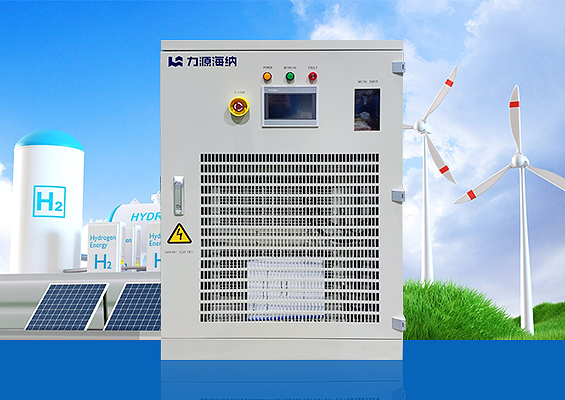
Ripple and isolation
Ripple is not a minor detail. Too much and deposits come out uneven, bubbles jitter, anodes die early. High ripple also wastes energy. The AC component heats the electrolyte without driving the reaction. In industrial settings, ripple factor is typically held under 1%, and precision plating demands tighter.
Output has to be separated from mains. That is a safety requirement, not a preference. High-current electrolysis gear runs on transformer designs. Insulation resistance and withstand voltage get tested at the factory. That is the floor, not a feature.
Protection comes down to three things. Over-current, over-voltage, over-temperature. Thermal shutdown trips by itself. Manual reset does not count. Continuous operation also needs N+1 redundancy, hot maintenance, and fast fault switching.
What actually matters in a DC power supply for electrolysis
In any DC power supply for electrolysis, current regulation accuracy sits at the center of everything. Electrolysis is current-driven. If current drifts, reaction rate drifts with it. Hydrogen supplies typically hold within 0.5%. Copper foil demands tighter, some down to 0.2%. Without that, product consistency across a line is not achievable.
Efficiency adds up fast when a unit runs around the clock. Every percentage point shows up in the electricity bill. Synchronous rectification brings voltage drop from 0.7V down to 0.1V, pushing efficiency above 94%, and up to 96% in copper foil work.
Response speed matters when load changes. Rare earth electrolysis wants response times under 30ms. Slower than that and the process destabilizes.
Parallel operation and redundancy come in when a single unit cannot deliver enough current. Multiple units run together, with tight current sharing, same-frequency same-phase hot backup, and automatic failover. Production does not stop.
Cooling and ingress protection depend on the floor. Dust, heat, humidity, all uncontrolled. Air cooling or water cooling by site. IP rating has to match the environment.
Technology routes
SCR rectification and IGBT chopping are the two mainstream approaches. SCR suits very high current and cost-sensitive sites. IGBT suits high frequency, high efficiency, and fast response. PCB plating adds high-speed pulse supplies with adjustable waveforms for different deposit requirements.
Before you buy
Before you buy a DC power supply for electrolysis, work out your maximum current and voltage first. Hydrogen, copper foil, and rare earth each have their own operating window. Selection starts with confirming that window.
Then find the regulation accuracy figure. Not “adjustable current.” The accuracy in per-mille. If it is not in the datasheet, move on.
Check isolation and withstand voltage. Input-output isolation is baseline for high-current equipment. Insulation resistance and withstand voltage ratings should be visible.
Look at redundancy and parallel capability. Continuous production cannot afford downtime. N+1 backup, hot maintenance, and fast switching are requirements, not extras.
Wiring and safety
Negative to cathode. Positive to anode. Do not reverse it.
Ground the tank, not just the supply. Keep electrolyte away from vents and control systems. Insulated tools.
Clean cooling channels and grilles on schedule. Verify calibration at set intervals. Stay within ratings and nothing inside needs servicing.
FAQ
How is a DC power supply for electrolysis different from a general DC supply?
A general supply is judged on whether voltage and current are adjustable. An industrial supply is judged on regulation accuracy, efficiency, response speed, and redundancy. Different standards.
Why does regulation accuracy matter so much?
Electrolysis is driven by current. If current drifts, reaction rate drifts, and product consistency is lost.
Do hydrogen, copper foil, and rare earth need the same supply?
No. Hydrogen prioritizes efficiency and reliability. Copper foil prioritizes accuracy and ripple. Rare earth prioritizes response speed and parallel capability. The application decides the specs.
Can AC be used?
No. AC flips polarity constantly, so ions never migrate in one direction.
How much current do I need?
Depends on the process window. Hydrogen reaches tens of thousands of amps. Copper foil and rare earth are in the thousands. Confirm the process first, then select the equipment.
⚡ Liyuan Haina Rectifier
Professional Manufacturer of IGBT and SCR Rectifiers
Our products are mainly used in electroplating, electrolysis, electrochemistry, anodizing, electrophoresis, smelting, surface treatment, photovoltaics, energy storage, hydrogen energy, and other applications. They are also widely used in industries such as hydrogen electrolysis, copper refining, copper electrowinning, electrolytic copper foil, and related industries.