

 [email protected] Request a Quote
  Call Us +86-371-66859535

Copper Electrolysis in Industrial Copper Refining
Copper Electrolysis in Copper Refining Operations
In copper refining, electrolysis is used because other methods reach a limit. Smelting removes most unwanted material, but it does not produce copper that behaves consistently in electrical service. For that reason, electrolytic refining remains part of standard industrial practice.
Electrolysis is not treated as a laboratory process in a refinery. It runs continuously, under fixed production schedules, and any instability shows up on the cathode surface long before it appears in test data.
How Electrolysis Is Applied on the Line
A refining line is built around the cell layout and the DC power system. Impure copper anodes are suspended in electrolyte. Cathodes are installed opposite them. The electrolyte chemistry is stable and well understood.
What operators focus on is current behavior. When current distribution shifts, copper does not deposit evenly. Edge buildup increases. Surface texture changes. These effects accumulate rather than appear suddenly.
This is why copper electrolysis is often discussed together with rectifier performance, not as a separate chemical step.
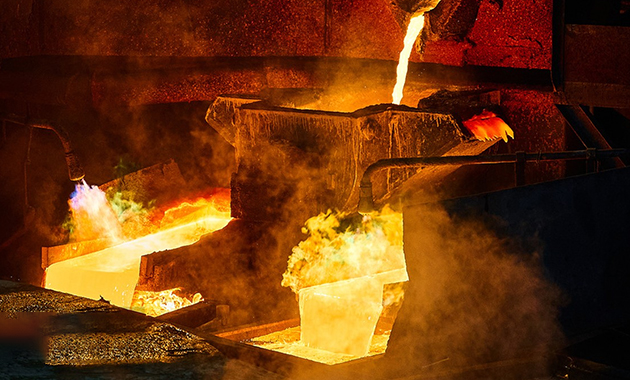
Rectifiers as Process Equipment
In copper electrolysis, the rectifier does more than supply power. It sets the conditions under which copper grows.
Ripple, current drift, and load response all influence deposition quality. Over long operating cycles, small deviations translate into higher energy use and lower cathode acceptance rates. In large installations, this becomes measurable very quickly.
Copper refining rectifiers and copper electrowinning rectifiers are designed for this type of operation. Their role is to maintain stable DC output while the process itself remains unchanged.
Impurities and Expected Behavior
Certain elements do not participate in electrolysis. Precious metals separate from the anode and settle as sludge. This is normal and planned for.
What matters is that these materials do not interfere with copper deposition. Electrolysis works because the system behavior is predictable when electrical and chemical limits are respected.
Why the Process Remains in Use
Copper electrolysis has not been replaced because it delivers repeatable results. It produces copper that meets electrical requirements and fits into continuous industrial workflows.
As demand for refined copper increases, electrolysis remains the final control step. The process itself is simple. Keeping it stable is not.