

 [email protected] Request a Quote
  Call Us +86-371-66859535

Electrolytic Refining of Copper
This industrial process uses a powerful DC current, supplied by rectifiers, to purify copper through electrolysis.
The Point of the Electrolytic Refining Process
We take the blister copper from the furnaces (about 98% pure) and use electrolytic refining to clean it up to “Grade-A” cathode (over 99.99% pure). If the copper’s not this clean after electrolysis, it’s no good for power lines or electronics—resistance is too high. The electrolytic copper produced here is the global standard for high-conductivity applications.
How the Electrolytic Copper Refinery Looks on the Floor (Tankhouse)
The heart of copper electrolytic refining is the tankhouse: rows of concrete cells, usually lead-lined, hooked up in series on a big DC circuit. This massive electrolytic refinery is designed for one thing: transforming impure anodes into pure cathodes. Inside each electrolytic cell, you’ve got alternating anodes and cathodes dunked in a bath of copper sulphate and sulphuric acid that’s constantly circulating.
The Anodes: These are thick slabs cast from the blister copper, each weighing in around 350 kg. They’re the “feedstock” for the electrolytic refining process – they get eaten away over the cycle.
The Cathodes: Start as flimsy “starter sheets” of pure copper. During electrolysis, copper plates right onto them until they’re a solid 120-150 kg slab of electrolytically refined copper – the finished product.
The Bath (Electrolyte): This stuff has to keep moving. We pump it, heat it (holds around 60°C), and filter it. You do that to keep the copper concentration even, the temperature stable, and to stop the cathodes from growing rough, “treelike” deposits that can short out the electrolytic cell.
The Basic Chemistry of Copper Electrolysis (Plain English)
Apply the current, and you force the copper to move via electrolytic refining:
At the Anode (+): Copper from the impure slab dissolves into the solution: Cu → Cu²⁺ + 2e⁻
At the Cathode (-): Copper from the solution plates out as solid metal onto the pure sheet: Cu²⁺ + 2e⁻ → Cu
In short, the electrolytic refining process migrates copper from the dirty anode over to the clean cathode.
What Happens to the Gunk During Electrolysis? (The Important Part)
The “Valuable Dirt” (Anode Slimes): Stuff like gold, silver, and platinum – they’re “nobler” than copper. In the electrolytic copper refinery, they don’t really dissolve; they just detach and sink to the bottom as a sludge we call “anode slime” or just “slimes.” We collect that and send it to the precious metals plant. That’s a major revenue stream on the side of copper electrolysis.
The “Nuisance Metals”: Elements like nickel, iron, and arsenic are more reactive. They do dissolve into the acid bath during electrolysis, but they don’t plate out on the cathode under our operating conditions. They just hang out in the electrolyte, building up over time until we bleed off a stream and clean it up in the electrolyte purification circuit.
Key Things We Watch in the Electrolytic Refinery (The Nitty-Gritty)
Power Bill: This is the big cost for electrolytic refining of copper. Takes about 250-300 kWh to produce one tonne of cathode copper via electrolysis. We watch the electrolytic cell voltage and current efficiency like hawks.
Kit and Labour: Newer electrolytic refineries use “permanent cathode” technology – think reusable titanium blanks – and automated stripping machines to pull the finished electrolytic copper. It’s faster, more consistent, and safer than the old manual way.
Environmental Controls: You can’t have acid mist in the air from the electrolytic tanks. Big ventilation systems handle that. All the spent or bled-off electrolyte gets treated – we recover any last bits of metal and neutralise the acid before it goes anywhere. It’s non-negotiable for a modern electrolytic copper refinery.
Where This Super-Clean Electrolytic Copper Ends Up
This electrolytically refined cathode is what gets shipped to rod mills. They melt it and draw it into wire. Its killer feature, achieved through electrolytic refining, is that ultra-low electrical resistance, which is why electrolytic copper is absolutely essential for:
The electrical grid: High-voltage transmission lines, transformers, busbars.
All manner of wiring: Building wire, magnet wire in motors and generators.
High-end electronics: The copper foil in your phone’s circuit board, components in telecoms gear.
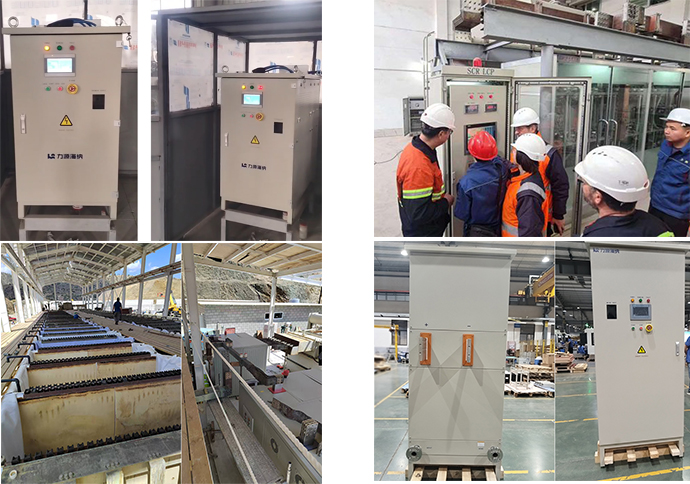
Applications of Rectifier for Electrolytic Refining of Copper
› 12KA 30V Copper Refining Rectifier Ensures Stable DC Output in Egyptian Electrolysis Project
› Copper Refining Rectifier Enhances Efficiency in Copper Recycling
› 300V 48KA Copper Electrolysis Project in Serbia Completed
› High Efficiency Copper Refining and Electrolysis Rectifier for Projects in Cyprus
Key Considerations for Selecting a Rectifier for Electrolytic Refining of Copper
› Match process requirements: Choose the appropriate rectifier model based on the specific needs of the refining process (e.g., current, voltage, waveform, etc.).
› Cooling method: Select air cooling or water cooling according to the working environment to ensure effective heat dissipation.
› After-sales service: Choose a supplier that offers comprehensive technical support and after-sales service.
Request a Quote: https://www.electrolysisrectifier.com/contact/